

For factories and large business facilities, a reliable and sufficient energy supply is essential. An LPG supply station provides the infrastructure to meet this need. Installation and operation involve complex details and strict safety standards. This article guides business operators through the essentials and important requirements.
LPG Supply Stations (Station Gas LPG): What Are They and Why Do They Matter?
In an industrial context, an LPG supply station is not a vehicle refueling station. It is a specially designed area and equipment set for storing, holding reserves of, and supplying large amounts of LPG to machinery and points of use within a factory or building. It provides energy security, keeps production running without interruption, and supports efficient energy cost control.
Types of Gas Supply Stations Used in Business Facilities
The appropriate station type depends on gas demand, available space, and budget. There are 2 main categories:
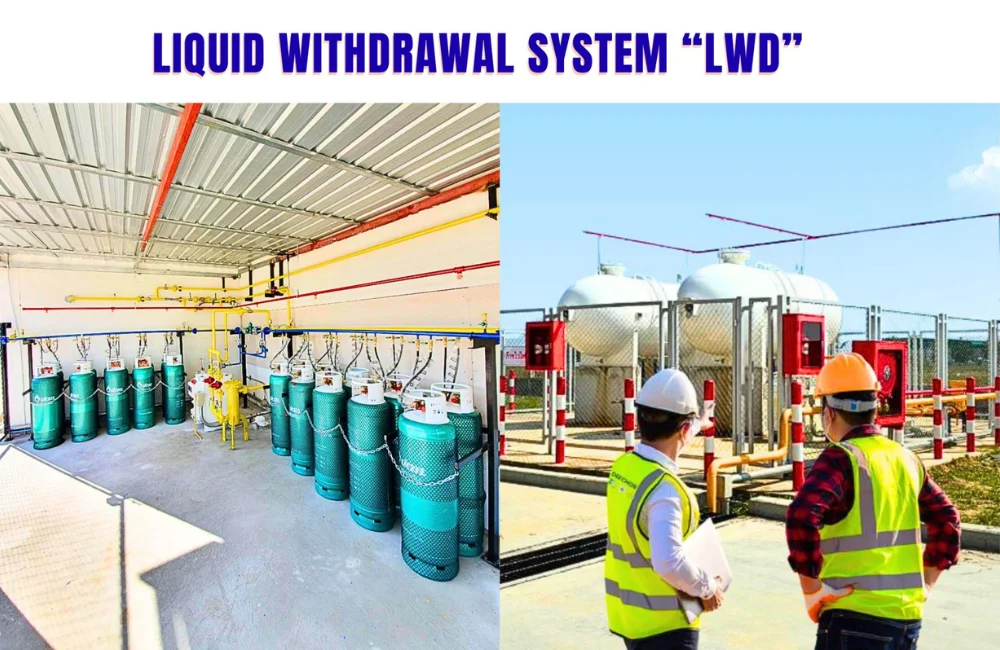
Gas Supply Stations Grouped Cylinders (Manifold System) & (LIQUID WITHDRAWAL SYSTEM) “LWD”
This arrangement suits medium-sized businesses or factories with moderate gas demand. Several 48-kilogram cylinders are connected through a manifold to supply vapor directly, or liquid is withdrawn through a vaporizer to convert it into vapor for maximum gas utilization (LIQUID WITHDRAWAL). Advantages include lower initial investment and flexibility to add or remove cylinders as demand changes. However, frequent cylinder replacement can limit supply continuity.
Gas Supply Stations Bulk Tank System
For factories with large, continuous energy demand, a Bulk Tank is an ideal solution. It provides substantial reserves, reduces delivery frequency, and often offers a lower unit gas price. However, it requires more installation space and a higher initial investment than a cylinder system.
Main Components and Operation of a Factory Gas Station
A complete, safe factory gas station depends on several key components working together, each performing a different function.
LPG Storage Area
This dedicated area for gas storage vessels must meet strict safety requirements, including safe distances from buildings and ignition sources, good ventilation, secure fencing, and clearly visible warning signs to prevent unauthorized entry.
Vaporizer
In large stations requiring high gas flow, a vaporizer accelerates conversion from liquid to vapor quickly enough to meet demand. This maintains stable, consistent system pressure, which is essential for machinery requiring a highly stable energy supply.
Regulator and Distribution Unit
This equipment reduces pressure from storage vessels or vaporizers to a suitable, safe level before gas enters the piping network and travels to points of use. Selecting quality regulators matched to the flow rate is important for machinery performance.
Piping and Safety Equipment
Piping carries gas from the station to points of use, with safety equipment installed throughout the system. Examples include Safety Relief Valves for overpressure, Gas Detectors, and Automatic Shut-off Valves. Together, they provide important protection against unexpected incidents.
Safety Standards to Know Before Installing Gas Supply Stations
Safety is non-negotiable when installing and operating an LPG station. Every stage must be supervised by engineers and comply with Department of Energy Business regulations.
Location and Safe Separation Requirements
The law specifies minimum distances between gas stations and buildings, property boundaries, and potential ignition sources to prevent incidents from spreading. Site selection is therefore the first step requiring careful assessment and specialist approval.
Required Fire Protection and Firefighting Systems
Gas stations must have compliant fire protection, such as dry chemical extinguishers of suitable size and quantity, a Water Spray System for cooling large tanks, and, in some cases, a Fire Sprinkler system for maximum safety.
Inspection and Maintenance of Gas Supply Stations Each Year
Under legal requirements, gas stations must undergo scheduled safety inspections by Department of Energy Business officials and authorized private inspectors, at intervals applicable to the type of facility. These inspections confirm that all equipment remains sound and safe to use. Preventive maintenance extends service life and significantly reduces potential risks.
Frequently Asked Questions (FAQ)
Installing LPG Supply Stations How Much Space Is Needed?
Space requirements depend on storage vessel size and legally required safety distances. Specialists can assess the actual site to provide the most accurate information.
Is a Permit Required to Build Factory Gas Stations ?
Yes. LPG storage or use above the legally specified quantity requires an LPG storage facility permit for a place of use from the Department of Energy Business. The installation must be designed and certified by an engineer.
Installing Gas Supply Stations How Long Does It Take?
The duration depends on project size and complexity, from design and permits through construction and system testing. It generally ranges from several weeks to several months.
Conclusion: Choose Specialists to Install Gas Supply Stations Safely and to Standard
LPG supply stations are central to energy supply for industry and large facilities. Their design and installation involve complex engineering and safety requirements. Choosing an experienced specialist partner such as DeeChoice Group is therefore crucial. Beyond delivering a compliant station, we provide advice and ongoing care to keep your system safe and efficient over the long term.
If you need specialists in gas systems and factory gas piping installation, DeeChoice Group has a specialist team with more than 10 years of experience. We use high-quality products that meet Department of Energy Business standards and provide attentive service, because standards and safety are central to our work. For more information, contact us through the following channels: