

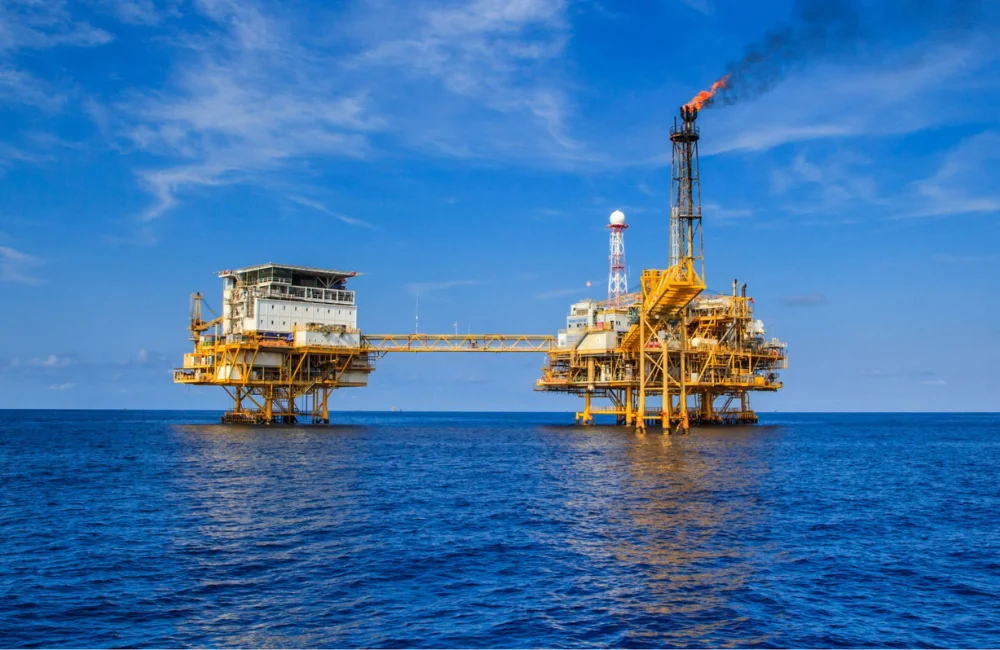
In business, where every expense matters, choosing efficient, cost-effective energy is essential. “LPG”, commonly called “cooking gas”, is popular not only in homes but also as a main energy source for hotels, restaurants, hospitals, and factories.
DeeChoice Group explains what LPG is, its industrial uses, advantages and disadvantages, and how it differs from NGV.
What Is LPG?
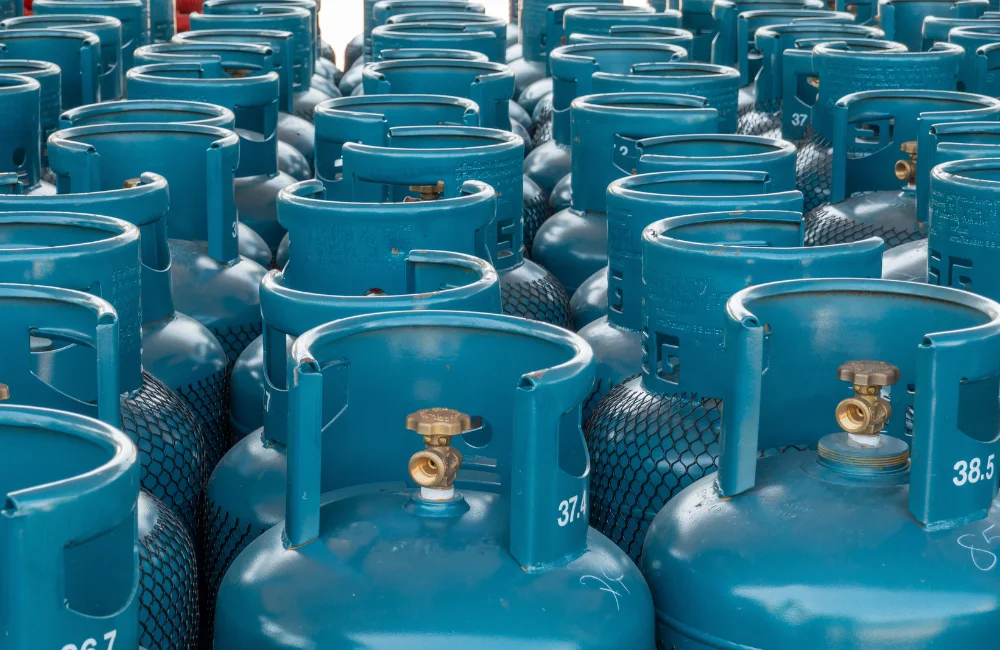
LPG stands for “Liquefied Petroleum Gas”, a fossil fuel obtained from crude oil refining and natural gas processing. Its main components are propane and butane. Normally gaseous, it can be liquefied under pressure for easier storage and transport. It offers high heat output, clean combustion, and versatile applications.
LPG Applications in Homes and Industry
High energy output and easy control make LPG an important energy option across sectors, from basic household uses to major industrial production processes. Each setting uses it differently.
Household Use
LPG plays an important role in cooking and gas water heating. Its fast, steady, easily controlled heat makes everyday tasks simpler and quicker.
Commercial and Industrial Use
LPG is essential for restaurant, hotel, and food court kitchens with high heat demand. In industry, it provides high, constant heat for paint curing, metal melting, glass and ceramic production, and Boilers generating steam for other processes.
Vehicle Fuel (Autogas)
LPG is also an alternative vehicle fuel known as “Autogas”. It is popular because it costs noticeably less than petrol and diesel. Its relatively complete combustion produces fewer emissions, offering another cleaner-energy option for transport.
LPG Installation Options for Businesses
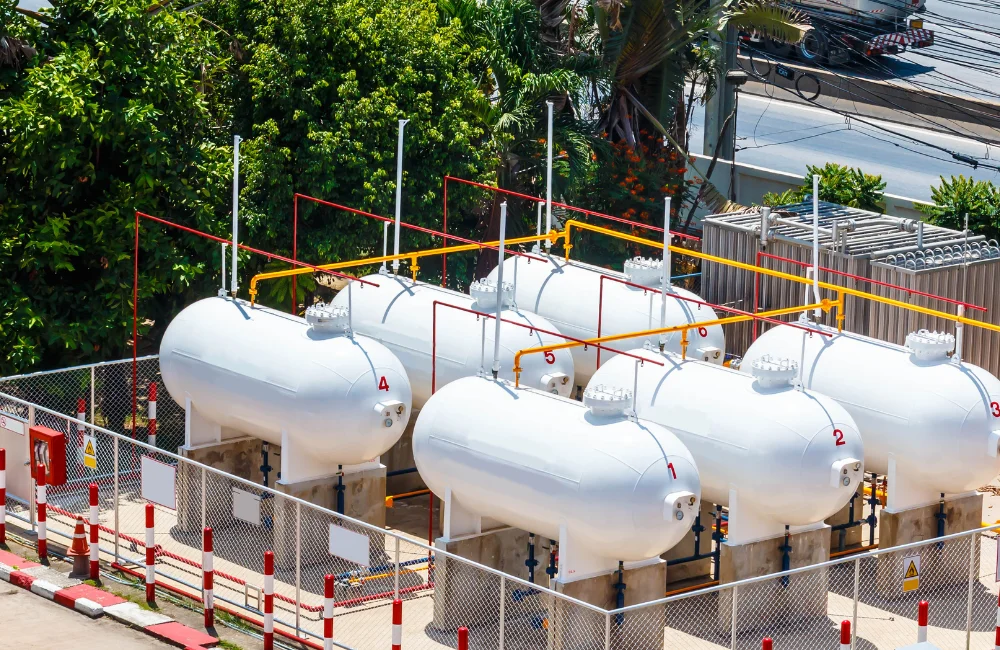
For efficient and safe LPG use, the system must suit demand and the business. Selection affects operational continuity and directly relates to safety standards and legal requirements. There are 3 main installation types:
Manifold System
Several cylinders connect through a Manifold, supplying vapor directly from the cylinders for continuous gas delivery. It suits small to medium businesses such as restaurants, small hotels, and small factories with moderate demand. Initial investment is relatively low, and cylinder numbers can be adjusted flexibly.
Liquid Withdrawal System
“LWD” withdraws LPG directly from the cylinder as Liquid, then sends it to a “Vaporizer” to convert it into Vapor before use. It provides more precise supply-rate control and better supports heavy demand.
Bulk Tank System
For large, continuous demand in major hotels, hospitals, or factories, Bulk LPG tanks are ideal. A large tank installed in a safe area provides substantial reserves, stable uninterrupted supply, and lower gas unit costs.
What Is NGV?
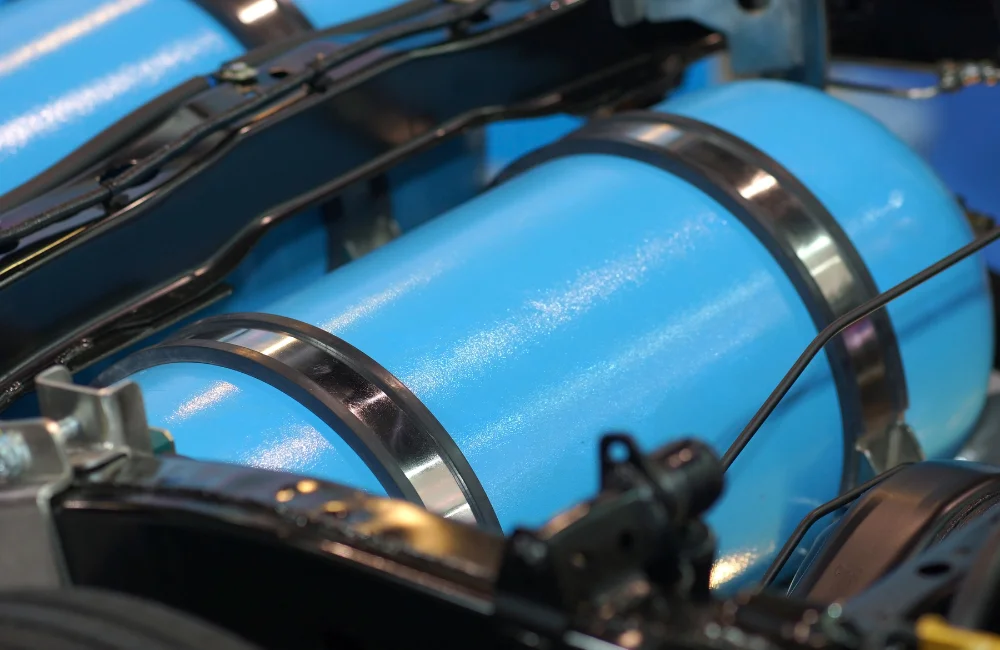
NGV stands for “Natural Gas for Vehicles”. It comes directly from underground natural gas reserves and consists mainly of Methane, which is lighter than air. It is compressed to very high pressure, around 200 bar, and stored in specially strong cylinders. NGV is therefore often used in large vehicles or specially designed cars.
How Do LPG and NGV Differ?
Both are gaseous fuels, but they differ in origin, composition, and storage. LPG comes from oil refining or natural gas processing and contains propane and butane; NGV is natural gas, mainly methane. LPG liquefies at relatively modest pressure, making handling and commercial or industrial installation more flexible than NGV.
LPG vs. NGV: A Clear Comparison
| Property | LPG (Liquefied Petroleum Gas) | NGV (Natural Gas for Vehicles) |
| Main Components | Propane and Butane | Methane |
| Storage State | Liquid (in relatively low-pressure vessels) | Gas (in very high-pressure cylinders) |
| Source | Oil refineries / natural gas processing plants | Natural gas reserves |
| Density | Heavier than air (collects near the floor if leaked) | Lighter than air (rises if leaked) |
| Heating Value | Higher | Lower |
Advantages and Considerations of LPG
Choosing LPG as a primary energy source requires weighing benefits and management challenges carefully to use it efficiently and safely. Understanding the full picture supports suitable installation and operational planning for your organization.
Advantages of LPG
LPG offers several benefits that make it a cost-effective commercial and industrial option.
- High Heat Output: It heats quickly and efficiently, reducing production or cooking time.
- Clean Energy: Complete combustion produces less soot and fewer harmful substances, benefiting the environment and employee health.
- Cost-Effective and Manageable: Competitive cost per unit of energy helps businesses control energy spending.
- Reliable Supply: It is readily available from multiple suppliers, supporting energy security.
Considerations
LPG use also requires careful attention to safety precautions.
- Flammable Fuel: Its high flammability requires strict safety standards in design, installation, and use.
- Heavier than Air: Leaks can accumulate in low or enclosed areas, making good ventilation and gas leak sensors essential.
- Specialist Work Required: Installation and maintenance must be performed by licensed teams with a thorough understanding of the system to prevent hazards.
Essential LPG System Safety Knowledge
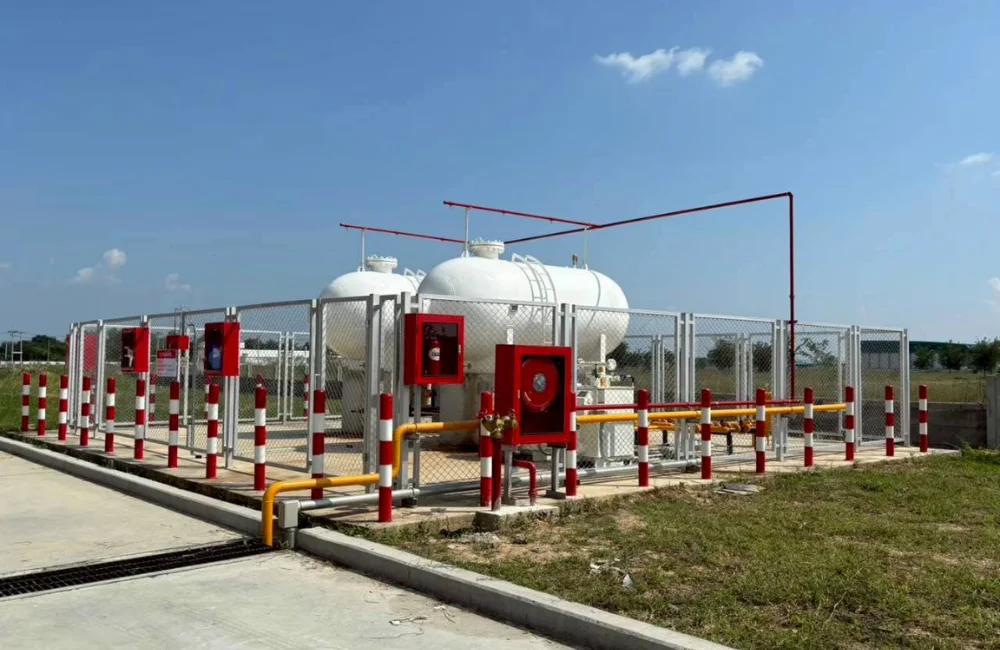
Efficiency and value mean little without safety. Business LPG systems are governed by clear standards and legal requirements. Understanding these basics helps operators build safe operations.
Correct Tank Installation and Placement
The key considerations are “location” and “ventilation”. Tanks must stand on stable ground in an open, well-ventilated area, with Department of Energy Business-required separation from buildings, ignition sources, and property boundaries. This prevents leaked gas accumulation and reduces fire risk.
Required Leak and Fire Protection
A good system has coordinated safety devices. Gas Detectors at risk points signal Automatic Shut-off Valves to stop supply immediately upon detecting a leak. Tank safety valves and appropriately sized and numbered dry chemical extinguishers provide additional emergency protection.
Why Inspect Gas Systems Every Year?
Annual inspections are essential system health checks. They are legally required for applicable facilities and are equally important for safety. Specialist engineers can find hidden deterioration, such as expired gaskets or small leaks, before they become major problems.
Conclusion: LPG Requires Professional Safety Standards
LPG is versatile and efficient, making it an excellent solution for modern business and industry. Realizing its full potential requires professional design, system planning, installation, and maintenance by experienced teams committed to high safety standards.
If you need specialists in gas systems and factory gas piping installation, DeeChoice Group has a specialist team with more than 10 years of experience. We use high-quality products that meet Department of Energy Business standards and provide attentive service, because standards and safety are central to our work. For more information, contact us through the following channels:
- Call 061-830-2626 (Sales)
- Line ID: @dcbpartner (Service)
- Facebook: Deechoice Group
- E-mail: Sales@dcbpartner.com
Frequently Asked Questions (FAQ)
Is a Permit Needed for a Factory or Restaurant Gas System?
Yes, if LPG storage or use exceeds the legal quantity, such as more than 250 liters, a permit from the Department of Energy Business is required.
How Important Are Legally Required Annual Gas Inspections?
They are essential and legally required to certify safety, prevent risk, and support confident business operations.
How Long Does an LPG Cylinder Last?
Generally, cylinders last around 5-10 years and must undergo regular inspection and retesting at legally specified intervals.
What Should You Do First if You Smell a Gas Leak?
Close the cylinder valve immediately, open doors and windows for ventilation, avoid all ignition sources, and contact a qualified technician urgently.